
What the Flock? Police Applaud High-Profile Arrests, But Public Backlash Prompts Widespread Bans
by- Scott Kovacs
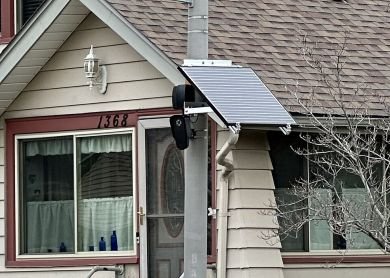
Flock Safety’s AI-powered automated license plate readers (ALPR) cameras are actively utilized by law enforcement to track stolen vehicles, locate missing persons, and apprehend violent criminals, but the technology has recently become a major point of discussion in nationwide news, highlighted both for their high-profile criminal tracking capabilities and an intense public backlash over privacy concerns. Recent news stories outline a mix of investigative successes, policy changes, and growing civilian resistance.
Law enforcement agencies continue to credit Flock cameras with cracking difficult cases by instantly cross-checking vehicles against criminal "hot lists”. Recent investigative reports highlight that ALPR data provided critical leads in the tracking and eventual apprehending of Ryan Routh, who was sentenced to life in prison for plotting to assassinate Donald J. Trump. In cities like San Francisco, Flock advertisements and proponents claim that violent crime fell significantly—by up to 40% in certain areas—following a massive deployment of the cloud-networked cameras. Local police departments across the country report recovering millions of dollars in stolen vehicles, tracking down missing persons, and executing outstanding murder warrants using still-image data generated by the cameras. And most recently, a homicide suspect in Ohio was captured near the U.S.–Mexico border after ALPR technology tracked his flight from the state.
The Flock Safety network consists of approximately 120,000 cameras across the United States that automatically scan every passing license plate, logging the time and vehicle location into a searchable database. Law enforcement leaders, such as Indian River County Sheriff Eric Flowers, heavily defend the tech. They point to major successes, including a recent case where Flock cameras successfully tracked down a wanted murder suspect who fled from Florida to West Virginia. Agencies use the network to generate real-time alerts when vehicles associated with warrants, violent crimes, or Amber Alerts pass a camera.
Even with these stories and the statistics, Flock cameras have sparked a massive nationwide pushback, leading to physical destruction and localized bans. In what news outlets describe as a coordinated wave of resistance, Flock cameras have been physically targeted in at least 36 states. Protesters and individuals have been sawing down the metal mounting poles, shooting the lenses with guns, and spray-painting over the sensors. Arrests have recently been made in states like Georgia following a string of camera destructions. More than 50 U.S. cities and counties have deactivated or entirely canceled their contracts with Flock Safety due to public pressure regarding mass surveillance. Notably, Los Angeles suspended the use of 138 pole-mounted Flock cameras over data privacy concerns, and Chicago has resisted entering active contracts with the firm. Florida’s Department of Transportation recently revoked the authority of local police agencies to install license plate readers on state highways. Meanwhile, California lawmakers killed a bill aimed at regulating the tech, even as the state's Attorney General sues local towns for illegally sharing captured driver data across state lines.
Critics emphasize that the "danger" of the system lies in how it seamlessly tracks normal citizens as they go about their day, treating everyone like a potential suspect. News investigations have brought to light multiple cases where police officers misused the national Flock database for personal reasons. Documented instances include officers using the system to illegally stalk ex-partners and love interests, leading to severe criminal sentences for the offending deputies.
A recent Los Angeles Police Department audit revealed glaring accuracy issues, finding that one out of every three vehicles flagged as "stolen" by the Flock AI algorithm was actually an inaccurate match. Civil rights advocates warn that these false positives lead to high-risk, potentially violent police confrontations with innocent drivers.
In response to the building pressure, Flock Safety recently announced it would scale back its standard data retention period from one month down to one week, while launching standard "Audit Assistance" tools to try to flag abnormal or abusive search behavior by police officers.
The systemic failure of internal oversight has triggered swift political action. On September 2, 2026, Florida’s state transportation office officially revoked local law enforcement's authority to place license plate readers on state highways. Dozens of other communities, including Fort Wayne, Indiana, have recently terminated or voted down their contracts with Flock Safety to preserve community trust, while citizens in cities like Albuquerque and Houston have taken to vandalizing or removing the cameras entirely.
As of September 23, 2026, at least 46 law enforcement officers have been explicitly identified as misusing the Flock Safety license-plate reader network for unauthorized or illegal purposes. This data comes from a comprehensive Washington Post investigation detailing how rogue officers turned the mass surveillance platform into a tool for stalking. In response to the public backlash and widespread reports of abuse, Flock Safety rolled out stricter guardrails. These changes include forcing all 6,000 client agencies to opt into an audit assistance feature, requiring active criminal case numbers for every search, and dropping default data retention from 30 days down to 7 days. But, unfortuately, the only way to control this misuse is to look at what is occurring and make the charges of illegal use very harsh.
The rapid expansion of Flock Safety's ALPR network has created a stark, national fault line between investigative utility and civil liberty. While law enforcement agencies continue to leverage the 120,000-camera grid to solve high-profile crimes, capture fleeing fugitives, and recover millions in stolen property, these operational successes no longer overshadow the system's systemic vulnerabilities. Plagued by a high rate of algorithmic false positives and documented instances of officer misconduct, technology has provoked an unprecedented civilian and legislative backlash. The resulting wave of physical vandalism, contract terminations, and strict statewide restrictions—such as Florida's highway ban—demonstrates that public trust cannot be maintained by utility alone. Flock Safety’s recent concessions to shorten data retention and implement audit tools acknowledge this friction, but the fundamental question remains: can a free society accept continuous, automated surveillance of its everyday citizens as the baseline price for public safety?
Scott Kovacs is a writer and editor for Patriotic Way. He primarily writes about politics, patriotism, and truth in reporting. Previously, he worked in the medical field as a Registered Nurse for 27 years.

© 2026 Patriotic Way. All rights reserved. All rights reserved.
Patriotic Way Home